

The Founder-Led Sales Trap
A common frustration I hear from business owners is:
“My company does well when we meet clients face-to-face, but our website doesn’t bring in any leads.”
This usually happens in businesses where the founder or senior leadership drives most of the sales. Deals flow through referrals, personal networks, and direct outreach. That approach works up to a point, but when it’s time to scale, the limitations become clear.
Your website — often treated as a digital brochure — fails to replicate the trust, authority, and confidence you deliver in person.
Why Referrals Alone Can’t Fuel Growth
Referrals and personal connections are powerful, but they plateau. At some stage, you want growth that goes beyond your immediate circle. That’s when your website should step in as your best salesperson.
But for many companies, it doesn’t. Why? Because the website isn’t built to sell or build trust — it’s just there to “look good.”
The Modern Buyer Has Changed
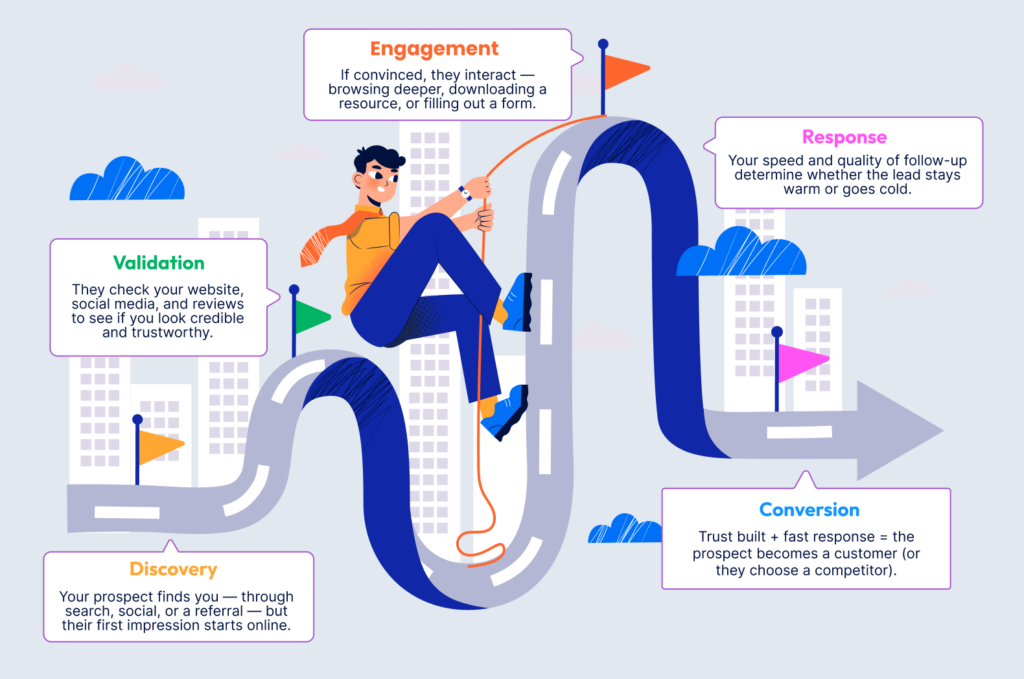
Today’s buyers don’t just hear your pitch and sign a deal. They:
- Verify information across multiple sources.
- Compare vendors online.
- Look for authority signals, testimonials, and case studies.
- Expect data to back up every claim.
And most importantly, they expect instant engagement.
If someone fills out your lead form and doesn’t hear back the same day — ideally within a few hours — chances are they’ll forget about you or move on to a competitor.
The Credibility Gap
Here’s the harsh truth:
- If your website lacks authority signals, you lose trust.
- If your forms are slow to respond, you lose leads.
- If your digital presence is fragmented, you lose opportunities before you even know they existed.
This is the credibility gap. It’s not just about SEO rankings or design quality — it’s about whether your website and digital footprint communicate enough trust to turn a visitor into a lead.
Why Businesses Wait Years for Results
Many businesses spend months or years waiting for their website to “start working.”
This delay often comes from:
- Building without a clear strategy.
- Ignoring SEO fundamentals.
- Not aligning the website with the sales process.
- Failing to build supporting credibility assets (social proof, content, authority links).
The result? Money and time wasted while competitors race ahead.
Turning Your Website Into a Sales Engine
Your website should:
- Mirror your sales pitch – everything you say in a room should exist online.
- Provide supporting data – case studies, benchmarks, certifications.
- Communicate trust instantly – testimonials, social proof, verified signals.
- Enable fast response – lead forms connected to instant alerts and workflows.
When these elements are in place, your website stops being a silent brochure and starts acting like your most consistent salesperson.
How Credibility Compass Helps
This is where The Credibility Compass™ comes in.
We built Credibility Compass to expose the hidden gaps that stop websites from generating leads:
- SEO and discoverability issues.
- Missing trust signals and authority indicators.
- Social and off-site credibility blind spots.
- Conversion friction points.
Think of it as an X-ray of your digital presence — showing not just what’s visible, but also what’s happening beneath the surface.
Final Thoughts
Your business may thrive through referrals and networks today. But to scale, your website needs to carry the weight of credibility, trust, and conversion — just like your best salesperson.
The question is: Does your digital presence build trust, or silently leak leads?